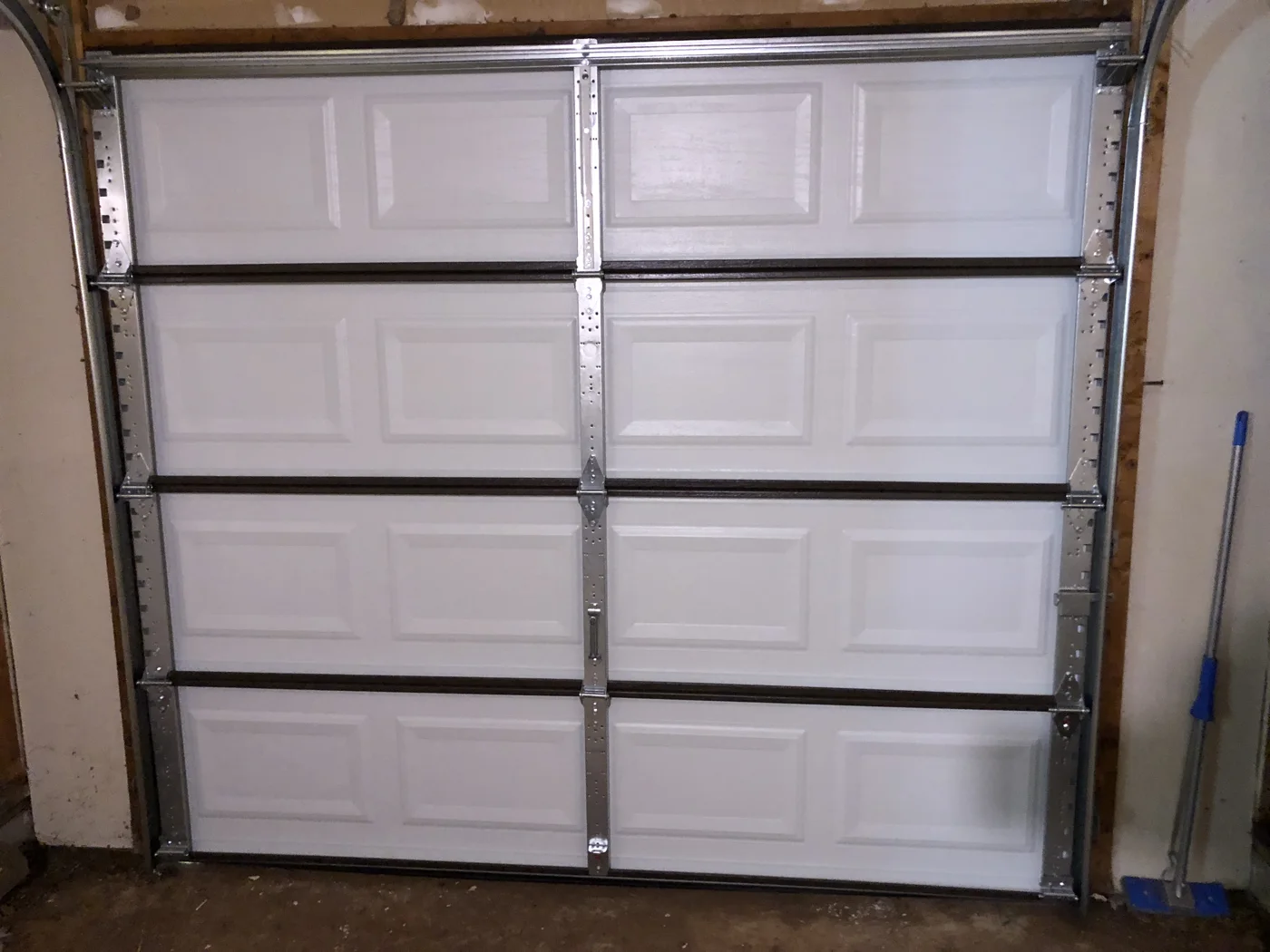

A door that stays open creates an immediate problem: you need to secure the opening, and you may not know whether the fault is in the door, opener, or controls. Start by keeping people and pets away from the opening. If the door is damaged, hanging unevenly, or has a visibly broken spring or cable, stop using it and arrange professional help.
This guide helps you collect useful information without turning a service call into an unsafe repair attempt. It does not establish that your door is safe to operate.
Describe the behavior before naming a part
Write down what you already observed. Did the door refuse to start closing, reverse during travel, or reach the floor and reopen? Did the problem happen through the remote, wall control, or app? If you have not tried another control, say that. You do not need to operate a questionable door repeatedly to complete the description.
A useful message is: “The door is fully open. It started closing, then reversed. The opener displayed a repeating light pattern.” That gives the service company a better starting point than “I need new sensors.”
Look for an ordinary obstruction from a safe position
Chamberlain’s diagnostic guidance identifies blocked, misaligned, disconnected, or damaged sensor circuits among possible closing faults. An item obstructing the sensor path may be relevant, but sensor problems are not the only explanation for a reversing door.
If there is an ordinary loose object you can safely remove without entering beneath an unstable door or touching the mechanism, remove it. Do not loosen brackets, move wiring, or reposition equipment to see what happens. Follow the exact model’s manual for any permitted owner checks.
Record an error accurately
A flash count is useful only with the equipment identity and the correct diagnostic guide. Do not assume a light pattern on one brand or model means the same thing on another. Note which indicator flashed, how often it flashed, and any message displayed.
Use an existing manual, invoice, or safely visible label to identify the model. Do not climb onto the opener or remove a cover just to collect information. Send a photograph only if it can be taken safely.
Keep safety features in service
Do not bypass the photo eyes, tape sensors together, increase closing force, or rely on a control override as the solution. LiftMaster distinguishes the photo-eye check from contact-reversal testing; those are separate safety functions. A door that moves is not proof that its protective features work.
Ask the technician to explain the diagnosis and confirm the manufacturer’s required safety checks after repair. Keep the result with the invoice, particularly if the complaint involved reversing or a failure to close.
Make the service request specific
Tell the company whether the garage has another entrance, whether a vehicle is trapped, and whether the opening can currently be secured. Ask for the diagnostic charge, arrival window, and approval process before repair work begins. Share observations rather than demanding a particular part replacement.
If you cannot secure the opening, describe that as an access problem when arranging service. Do not improvise a method of lowering or supporting a damaged door.
Questions homeowners ask
Do flashing lights mean I need a new opener? Not by themselves. The model-specific diagnosis should come first.
Should I order sensors before the visit? Ask the service company whether it accepts customer-supplied parts and whether the fault has actually been confirmed. Buying a part does not verify the cause.
What should the invoice explain? The reported symptom, diagnosed fault, work completed, parts used, and warranty terms.
Sources & further reading
Sources provide technical background. Worksheets and comparison questions are editorial guidance, not an equipment diagnosis.
Keep reading
Looking for local context?
Explore the NJ and PA area guides for nearby-place references and questions to confirm with a provider. Business coverage and Google Maps links are added only after verification.