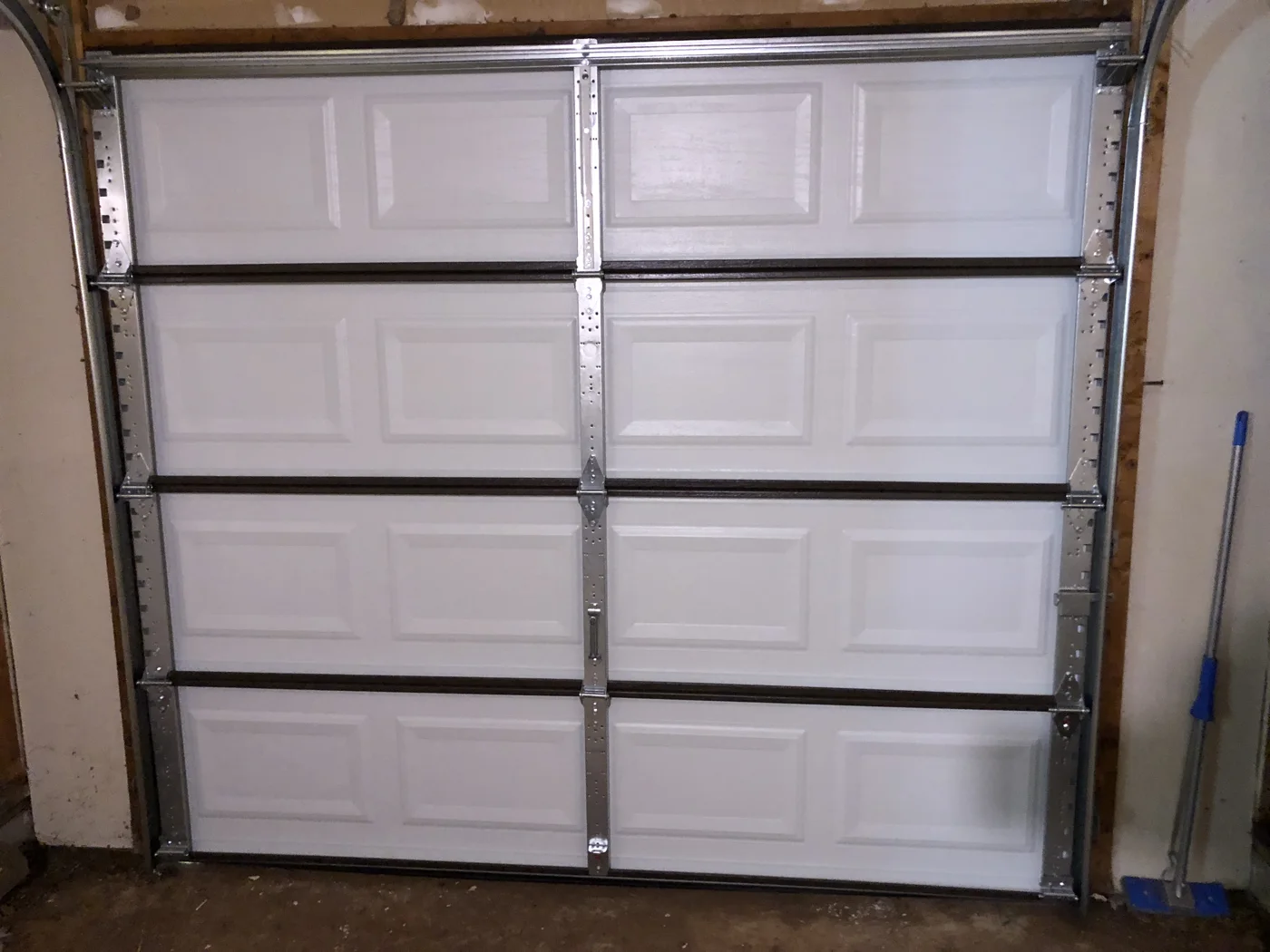

A maintenance checklist is most useful when it belongs to your particular equipment. Start with the door and opener manuals, then keep a short record of observations and professional service. A generic list cannot establish that a door is safe.
You do not need to become a garage door mechanic to keep a useful record. Your role is to preserve information, follow the manufacturer’s owner instructions, and report changes promptly.
Put the equipment information in one place
Create a folder containing the door and opener identification, installation invoice, manuals, warranty documents, and service-company contact details. Keep the door and opener entries separate so future questions reach the correct manufacturer.
If the house was purchased with the equipment already installed, begin with what you actually have. Mark unknown information as unknown. An estimated installation date is less useful than a clear note that the date has not been confirmed.
Add an accessible photograph of each identification label if one is already safely available. Do not remove covers or reach into hardware to obtain it.
Build the schedule from the manuals
DASMA recommends monthly owner safety checks and maintenance, alongside an annual visit from a trained door systems technician. Its guidance also emphasizes that individual door and opener models have their own instructions.
Use the exact manuals to list owner tasks, intervals, and stop conditions. If the documents disagree or an instruction is unclear, ask the manufacturer or service provider before proceeding.
Do not combine internet instructions into an improvised procedure. A record can simply say “manufacturer check due; professional assistance requested” if you cannot safely carry it out.
Keep observations separate from diagnoses
A good entry describes what changed: a new noise, an unfamiliar message, visible weather-seal damage, or a different movement pattern already noticed during ordinary use. Record when it happened and whether service was requested.
Avoid converting an observation into a repair instruction. “Noise near the right side” does not establish which part should be lubricated or replaced. Give the technician the observation and ask for the diagnosis.
DASMA identifies springs, cables, and bottom brackets as components requiring particular care because of spring tension. Do not tighten or adjust them as part of a general household maintenance session.
Use a five-line service log
For each service event, record:
- Date and reason for the visit.
- Findings explained by the technician.
- Work and parts you authorized.
- Safety checks documented after the work.
- Warranty contact and any follow-up instructions.
Attach the invoice rather than rewriting every line. If a recommendation is deferred, note its stated reason and the conditions under which the provider says you should arrange another visit.
Do not let an upgrade hide a mechanical concern
DASMA’s opener guidance explains that a stronger opener is not the remedy for an out-of-balance door. If the sales discussion moves toward a new motor, ask whether the door’s mechanical condition was assessed first.
Keep this as a question for a trained technician. This guide does not ask you to disconnect the opener or test the door by hand.
Take the record to the next appointment
Send the service company a short summary before its visit. Include prior repairs, recurring complaints, and any unresolved recommendations. Ask the technician to correct identification errors in the record.
After the appointment, compare the invoice with the work approved and add the new documents. You now have a useful history for a future technician, purchaser, or warranty discussion.
Does a completed checklist guarantee safety? No. Recordkeeping helps communication and maintenance planning; it does not replace inspection or model-specific instructions.
Should I add a generic lubrication schedule? Use the manufacturer’s instructions for your equipment and ask your service provider about any unclear task.
Sources & further reading
Sources provide technical background. Worksheets and comparison questions are editorial guidance, not an equipment diagnosis.
Keep reading
Looking for local context?
Explore the NJ and PA area guides for nearby-place references and questions to confirm with a provider. Business coverage and Google Maps links are added only after verification.