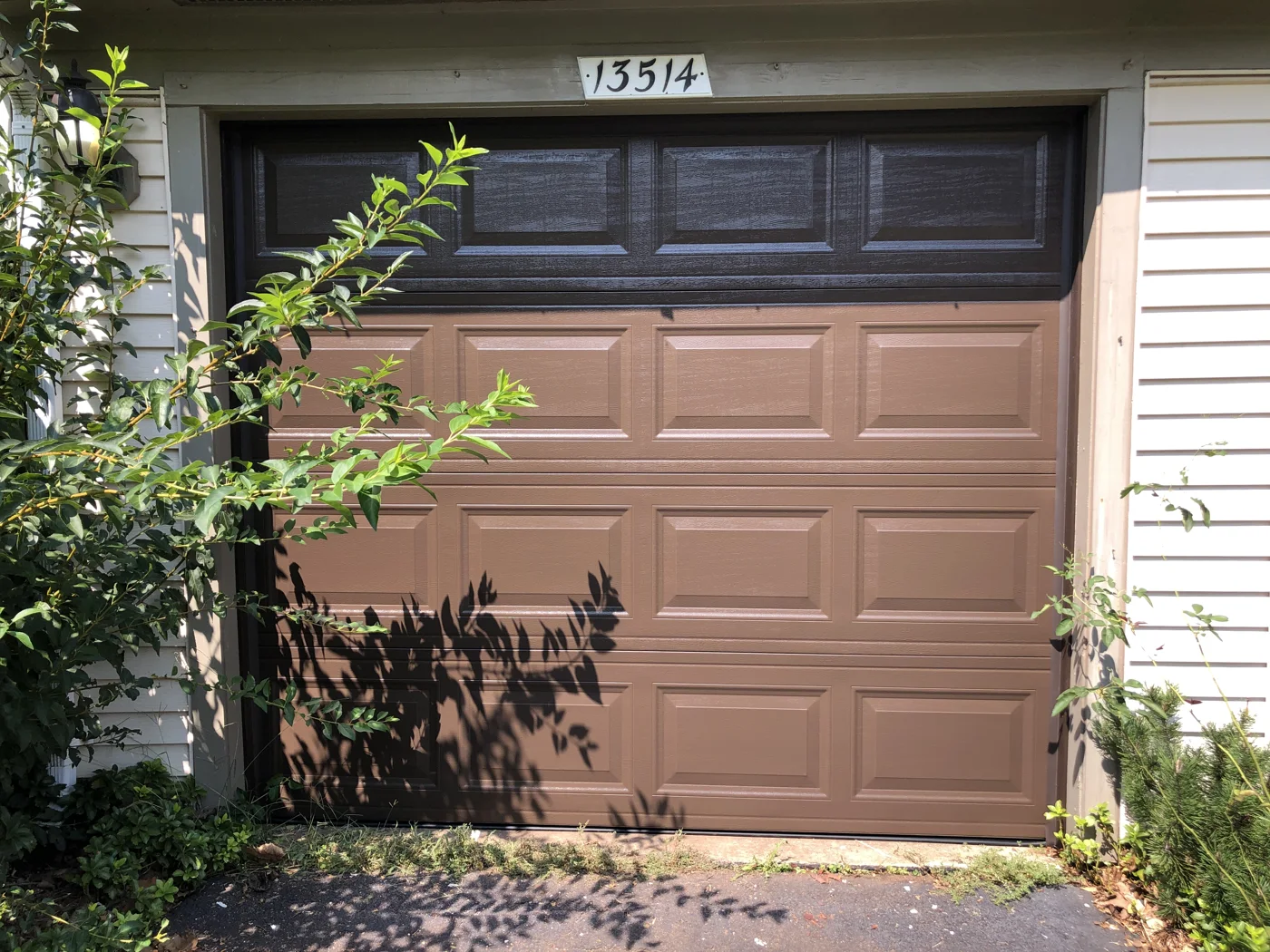

The most useful repair-or-replace comparison starts with two written scopes. One should describe the work required to restore the existing door. The other should identify the complete replacement package. Comparing a repair total with a new door’s advertised starting price leaves too many unanswered questions.
Begin with a professional assessment if the door has been hit, moves unevenly, or shows damaged hardware. This article is a decision worksheet, not a condition assessment.
Establish what actually needs attention
Ask the technician to separate the immediate failure from other observed wear, cosmetic damage, and optional upgrades. Request photographs or an explanation of each item, without standing under a questionable door to inspect it yourself.
Clopay’s repair guidance treats the extent of damage and overall door condition as relevant to the decision. Ask how those factors apply to your actual door rather than accepting a blanket rule based only on age.
For example, “the bottom section is damaged” is the beginning of a diagnosis. It does not explain whether the rest of the system can remain, what replacement is available, or what the finished result will look like.
Ask whether a section replacement is available
A damaged section does not automatically answer the whole-door question. Clopay states that replacement sections for its steel and wood doors are available where the model remains in production. Availability still needs confirmation for the exact door.
Ask the supplier to identify the proposed section and explain its appearance relative to the remaining door. Request a written answer about what the repair includes and any limitations. Do not infer compatibility from the panel pattern alone.
If a replacement section cannot be identified, record that fact in the comparison. Avoid treating an unconfirmed part as a ready alternative to a full replacement.
Build a side-by-side scope
For the repair option, request the diagnosed work, parts, labor, service fees, warranty, and exclusions. Ask what work is required now and what items are merely recommended.
For replacement, request the exact door model and configuration, installation work, removal and disposal, accessories, and warranty responsibility. Ask the installer to identify what existing equipment, if any, it proposes to retain and why.
Keep the opener decision explicit. A proposal should tell you whether the opener remains, is replaced, or requires separate assessment. Do not assume that “new garage door” means every associated component is included.
Compare the finished result you actually want
Think about how you use the garage. Is the main concern dependable access, appearance from the street, weather exposure, or a change in daily convenience? Write those priorities before the sales discussion.
Request product documentation for any proposed feature. If a seller predicts savings, improved comfort, or a particular service life, ask what evidence and conditions support that claim. This guide does not assign a dollar return to an upgrade.
A preferred design may justify replacement for you even when repair is possible. Keep that preference separate from a claim that replacement is technically necessary.
Make an informed authorization
Before agreeing, confirm the final scope, scheduled work, payment terms, and process for changes. Retain both comparison proposals so you can see why you chose one.
After completion, request the invoice, equipment identification, owner instructions, and applicable warranties. If a repair was chosen, record exactly which parts were replaced. If a new door was installed, retain the model and configuration for future service.
Is there a universal percentage at which replacement becomes better? No percentage is supplied here. The decision depends on documented alternatives and your priorities.
Should I replace a working opener at the same time? Ask for a separate assessment and scope so you can make that decision explicitly.
Sources & further reading
Sources provide technical background. Worksheets and comparison questions are editorial guidance, not an equipment diagnosis.
Keep reading
Looking for local context?
Explore the NJ and PA area guides for nearby-place references and questions to confirm with a provider. Business coverage and Google Maps links are added only after verification.
A closer look at surface deterioration
Document corrosion separately from dents, cracks and deformation. Appearance alone does not identify the cause or determine whether a section can be replaced.