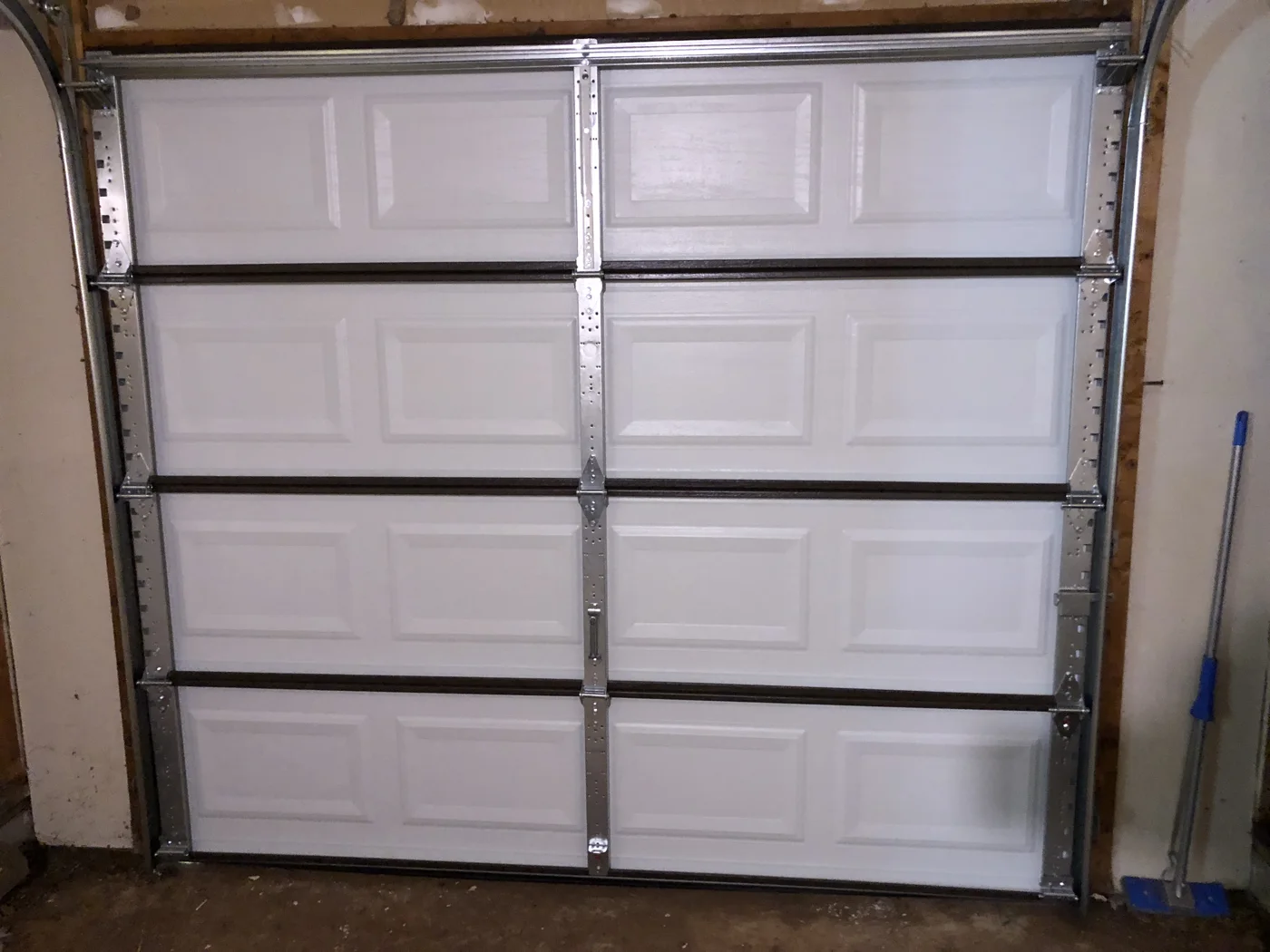

A crooked door, a displaced roller, or a visibly bent track should be treated as a reason to stop using the equipment. Keep people away from the opening and arrange a trained technician's assessment. Do not attempt to push the door back into place.
“Off track” describes an observed condition. It does not tell you whether the underlying problem is limited to a track, involves other hardware, or includes damage to the surrounding attachment points.
Give the service company a clear description
Say what you can see safely: one side is lower, the door was hit, a roller appears displaced, or a track looks bent. Tell the provider whether the opening is partly blocked and whether another entrance is available.
Do not climb under the door or move it to collect better photographs. A photograph taken from a safe location can help scheduling; it does not replace an inspection.
Ask for a system assessment
DASMA's technician damage checklist includes door alignment, track deformation and attachment, rollers, brackets, spring-system components, and sections. It is guidance for trained technicians, not a homeowner repair sequence.
Ask the provider to explain what caused or contributed to the condition and what it checked beyond the most visible damage. A proposal should connect the findings with the work recommended.
Compare repair and replacement scopes
If the proposal calls for track replacement, ask which section or assembly is included, how the replacement is identified, and what other work is required. If a repair is proposed, ask the company to explain the intended finished condition and any limitations.
Do not assume that straightening a visible bend is the complete repair or that every damaged track requires a whole new door. Request the assessment and viable options for your actual equipment.
Keep additional recommendations understandable
An impact may lead to several proposed replacements. Ask the technician to separate damaged items from preventive recommendations. Request an explanation for each, including whether deferring an optional item affects the work being approved.
If the framing or attachment appears questionable, ask which professional needs to assess it. Avoid accepting a door-only quote as an assessment of the whole building.
Set the service boundaries
Confirm the visit charge, approval process, access arrangements, and who will secure the opening if repairs cannot be completed during the visit. Do not treat a scheduling promise as a guarantee that every required component is already on the truck.
After the repair, retain the work description, relevant component identification, warranty, and documented checks. These records help if the same symptom returns.
Can I hammer the track back? This guide does not recommend homeowner track adjustment. Keep the equipment out of use until assessed.
Does “cable off drum” mean the track caused it? It is another observation to report, not proof of a particular cause.
Should I request emergency service? Explain the current access and security problem and ask the provider to confirm its actual response arrangements.
Sources & further reading
Sources provide technical background. Worksheets and comparison questions are editorial guidance, not an equipment diagnosis.
Keep reading
Looking for local context?
Explore the NJ and PA area guides for nearby-place references and questions to confirm with a provider. Business coverage and Google Maps links are added only after verification.