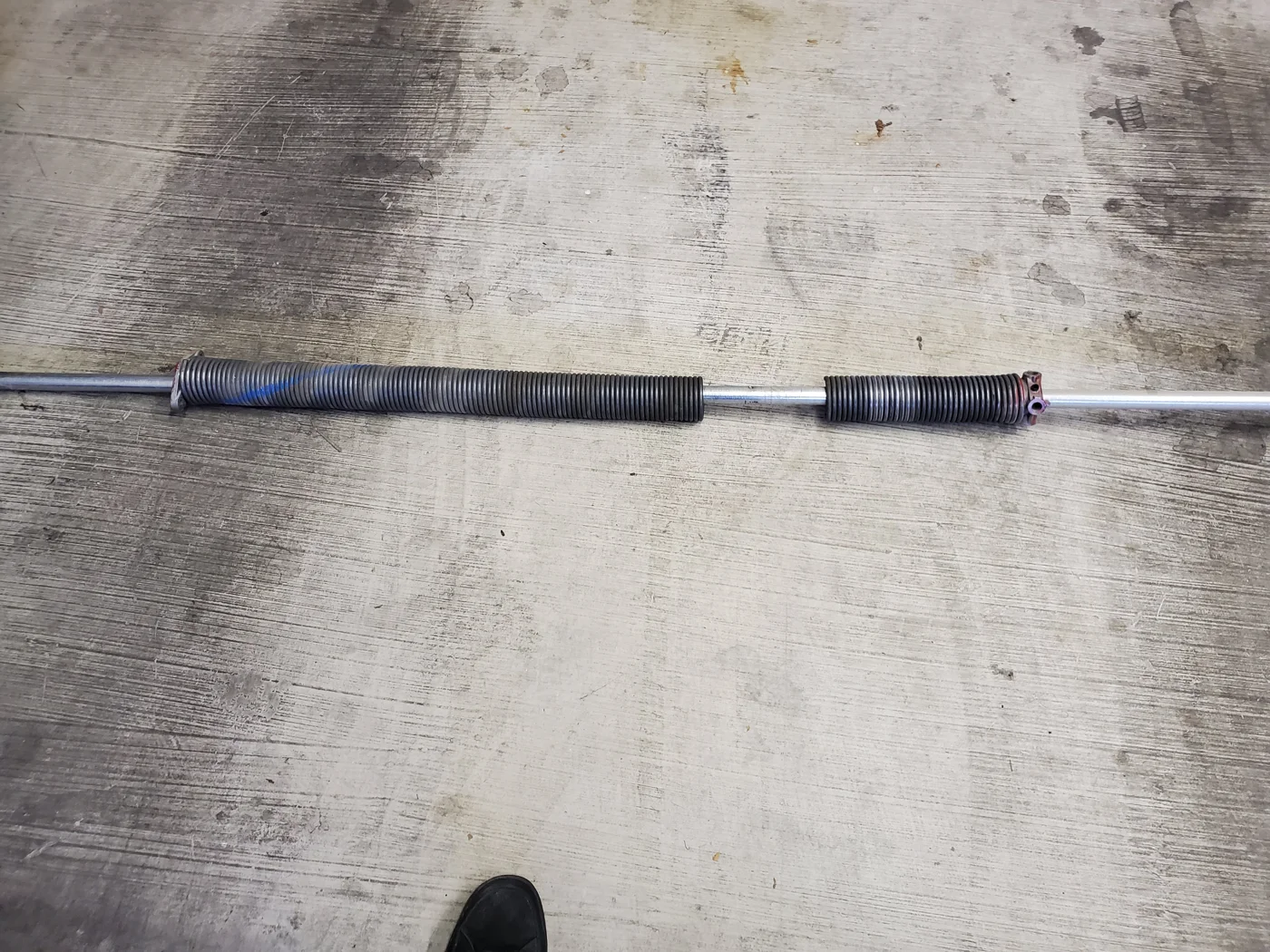

A loud bang followed by a door that will not open may lead you to suspect a broken spring. It is useful information for a service call, but it is not a complete diagnosis. Keep the opening clear, stop operating the door, and explain what happened to a trained door systems technician.
If a spring is broken, DASMA says not to operate the door until it has been replaced. Do not try to adjust, remove, or repair spring-system components or the parts to which they attach. This guide is for arranging service and evaluating proposals, not performing the repair.
Describe the failure safely
Tell the provider whether the door is open or closed, whether you heard a sound, and whether a vehicle is trapped. Mention any visible damage already noticed from a safe location. Do not pull an emergency-release cord, force the door, or run the opener again to prove the symptom.
Keep diagnosis separate from ordering. Saying “I suspect a broken spring” gives the company room to inspect the system; ordering a spring by appearance does not establish what the door requires.
Ask what the proposed spring service includes
A useful written proposal identifies the diagnosed fault, the work included, the parts being supplied, labor, visit fees, and warranty responsibility. Ask whether any additional recommended work is essential to the repair or a separate option.
If the provider recommends more than one spring, ask it to explain the system configuration and replacement recommendation. Request the reasoning in writing. This article does not supply a spring-sizing chart or tell you which spring to purchase.
Compare specifications with your actual use
Ask the technician to explain the replacement specification and any cycle-rating claim offered. A stated rating is not a promise that a spring will last a specific number of calendar years in your household.
If an upgraded option is proposed, ask what changes, what it costs relative to the standard proposal, and what warranty applies. Keep those answers with the quote so you can compare complete options rather than only a package name.
Be clear about access and scheduling
Explain if the garage has no other entrance or the opening cannot be secured. Ask for an arrival window and the charge if you decline work after diagnosis. Same-day and emergency availability must be confirmed with the actual provider; this publication does not dispatch technicians.
When evaluating local search results, verify the business behind the appointment and confirm that it serves your specific address. A nearby town name in an advertisement is not confirmation that a crew is available.
Keep a record after the repair
Ask the technician to document the work and applicable operational and safety checks. Retain the part information, invoice, and warranty contact.
Does a spring problem mean I need a new door? Ask for an assessment of the existing door and a separate explanation of any replacement recommendation.
Can a stronger opener compensate? Request a mechanical diagnosis rather than treating a new opener as a substitute for spring repair.
Are local prices listed here? No verified local quote data is available. Compare written proposals for the diagnosed work.
Sources & further reading
Sources provide technical background. Worksheets and comparison questions are editorial guidance, not an equipment diagnosis.
Keep reading
Looking for local context?
Explore the NJ and PA area guides for nearby-place references and questions to confirm with a provider. Business coverage and Google Maps links are added only after verification.